
Pediatric CPR & First Aid
Emergency response for infants and children.
For parents, teachers, coaches, employees, and anyone who wants to be prepared.
View courseAHA BLS certification for nurses, EMTs, dental staff, medical assistants, and healthcare workers.
View courseStart online and complete the skills check in person.
RegisterTraining for childcare providers, preschool staff, and daycare professionals.
View courseOn-site CPR, First Aid, and BLS for businesses, schools, churches, and organizations.
Learn moreChildcare Provider Training
Pediatric CPR, First Aid, and Health & Safety training for California childcare providers, preschool staff, family childcare homes, and daycare workers.
Emergency response for infants and children.
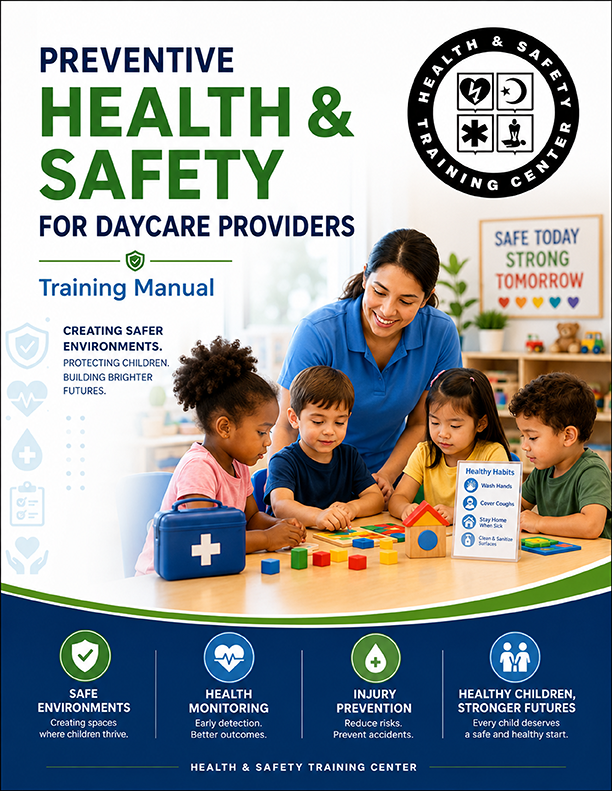
Prevent illness and injury before it happens.
Included with the Pediatric CPR/First Aid course.
For daycare, preschool, and family childcare.
Starting or working in a childcare program is a serious responsibility. Parents are trusting you with their children, and the State of California expects childcare providers to understand basic safety, emergency response, illness prevention, and healthy childcare practices.
Our 16-hour childcare provider training package is designed for daycare providers, preschool staff, family childcare home providers, assistants, directors, and people preparing to open or work in a licensed childcare setting.
This training brings together the two major parts many childcare providers need: Pediatric CPR and First Aid, plus Preventive Health and Safety for daycare providers. The goal is simple. You should leave class with practical knowledge you can use in a real childcare setting, not just information you heard once and forgot.
Simple pricing for childcare providers who need one course or both. Take the full 16-hour package and save.
Pediatric CPR and First Aid
$60
Includes EMSA stickers.
Register Now16-Hour Childcare Provider Package
$150
Includes Pediatric CPR/First Aid plus Preventive Health and Safety.
Register NowPreventive Health and Safety for Daycare Providers
$125
8-hour health and safety training for childcare providers.
Register NowThe full childcare provider package brings together two 8-hour courses that work together — one for emergencies, one for prevention.
This portion focuses on emergency response for infants and children. Students learn how to respond to breathing problems, choking, cardiac emergencies, bleeding, burns, allergic reactions, injuries, sudden illness, and other emergencies that may happen in a daycare, preschool, or family childcare home.
This portion focuses on preventing problems before they happen. Students learn about illness prevention, injury prevention, safe environments, nutrition, lead poisoning prevention, emergency planning, medication safety, sanitation, health records, and the daily safety habits needed in childcare.
Children are not small adults. They breathe differently, move differently, eat differently, and depend on adults to notice danger before it becomes an emergency. In childcare, small problems can become serious fast if staff are not trained.
A child may choke during snack time. A toddler may fall on the playground. A baby may have trouble breathing. A child may come to school with symptoms of illness. Cleaning supplies may be stored in the wrong place. A door may be left unlocked. A toy may be too small for the age group.
Training helps providers slow down, think clearly, and respond the right way. This course is not only about passing a requirement. It is about building safer childcare habits. When providers understand health and safety, children are better protected, parents feel more confident, and childcare programs run with fewer preventable problems.
The Pediatric CPR and First Aid portion teaches students how to respond to emergencies involving infants and children. Topics may include CPR, choking relief, first aid basics, bleeding control, burns, allergic reactions, seizures, asthma-related emergencies, shock, head injuries, poisoning concerns, and when to call 911.
Students also learn how to stay calm during an emergency. In a childcare setting, panic can make things worse. A trained provider knows how to check the scene, protect the child, call for help, and give care until emergency medical services arrive.
This training is especially important for daycare providers because children are active, curious, and still learning what is safe. Childcare staff must be ready to respond at any time. You can also learn more about our CPR, AED & First Aid classes.
The Preventive Health and Safety portion focuses on keeping children safe before emergencies happen. This is where childcare providers learn how to build a safer daily routine.
Topics may include infection control, illness prevention, handwashing, cleaning, disinfecting, diapering safety, injury prevention, safe toys, playground safety, choking hazards, classroom safety, nutrition, food allergies, food handling, lead poisoning prevention, medication safety, emergency preparedness, parent communication, and safe childcare environments.
This course is written for real people doing real childcare work. The information is explained clearly, using language that is easy to understand. You do not need a medical background to take this class.
We focus on examples that make sense in daycare centers, preschools, and family childcare homes. That includes snack time, nap time, playground time, drop-off, pick-up, diaper changes, cleaning routines, field trips, and emergency situations.
The goal is not to overwhelm students with medical language. The goal is to help students understand what to do, why it matters, and how to apply it when children are present.
This 16-hour training package is a good fit for:
Many students take both courses together because CPR, First Aid, and Preventive Health and Safety are all important parts of working safely with children.
If you are planning to work in childcare or open a childcare program, taking both courses together can save time and money. Instead of registering for CPR/First Aid separately and then looking for a separate health and safety class later, the 16-hour package keeps the process simple.
The Pediatric CPR and First Aid class prepares you to respond when something goes wrong. The Preventive Health and Safety class helps you reduce the chance of something going wrong in the first place.
Both are important. One teaches emergency response. The other teaches prevention. Together, they help create a safer childcare environment.
CPR First Aid Training School offers training for childcare providers who want clear instruction, practical examples, and professional support. Whether you are starting your childcare journey, renewing your training, preparing for employment, or working toward opening a daycare, this course gives you a strong foundation.
Students may register for Pediatric CPR and First Aid only, Preventive Health and Safety only, or the full 16-hour childcare provider package. Register today and take the next step toward safer childcare.
Total Training
16 Hours
CPR/First Aid
EMSA Stickers
For
CA Childcare
Sign up for Pediatric CPR and First Aid, Preventive Health and Safety, or the full 16-hour childcare provider package.